The Ultimate Guide to Greeting Card Books: How to Turn Your Cards Into a Book
Updated: 1 day ago
Every "greeting card book" that shows up in a search is two different products wearing the same name, and most guides never say so before recommending one. Add in the boxes, albums, and scrapbooks already competing for the same drawer of cards, and it's no wonder most people end up doing nothing with theirs at all. This guide sorts out what one is, why cards pile up in the first place, and how to turn cards into a book, whatever occasion they came from.

What Is a Greeting Card Book?
A greeting card book is a bound keepsake made from cards you've already received. Many people simply call it a "card book". Each card gets digitized and laid into printed pages in the order they arrived, so what used to be a stack of loose cards becomes something that reads like an actual book, cover to cover.
That's worth being specific about, because "greeting card book" also gets used for something else entirely: a blank, pre-bound album with empty plastic sleeves you buy and fill in yourself, card by card, as they arrive. That's a real product, and a fine one if flipping through sleeves and adding to an ongoing binder sounds like your kind of project. It's not this. A greeting card book, the way Cardkive makes one, starts with cards you already have, not an impersonal album waiting to be filled.
What Cardkive does is transform those cards into a memory book that digitally preserves every word. This not only gives you a lasting collection of your memories physically, but also digital copies you can save and share with loved ones and future generations.

Why People Hold Onto Greeting Cards
Most people don't decide to save a card. It doesn't get thrown away, and then there's another one the next year, and another, until there's a drawer, a shoebox, or a bin that's technically "the cards" without anyone having chosen to start a collection.
The reason they stick around is usually the handwriting. A card holds someone's actual words, in their own hand, written on a specific day for a specific reason. A text or an email can say the same sentiment, but it doesn't carry the same evidence that a person sat down and wrote it. That's most of why throwing a card away can feel like more than tidying up, even when the card itself is just cardstock and ink.

Greeting Card Books by Occasion
A greeting card book isn't tied to one kind of occasion. It's the same format applied to whatever cards someone has, and the cards themselves are usually organized around one of a handful of recurring moments.
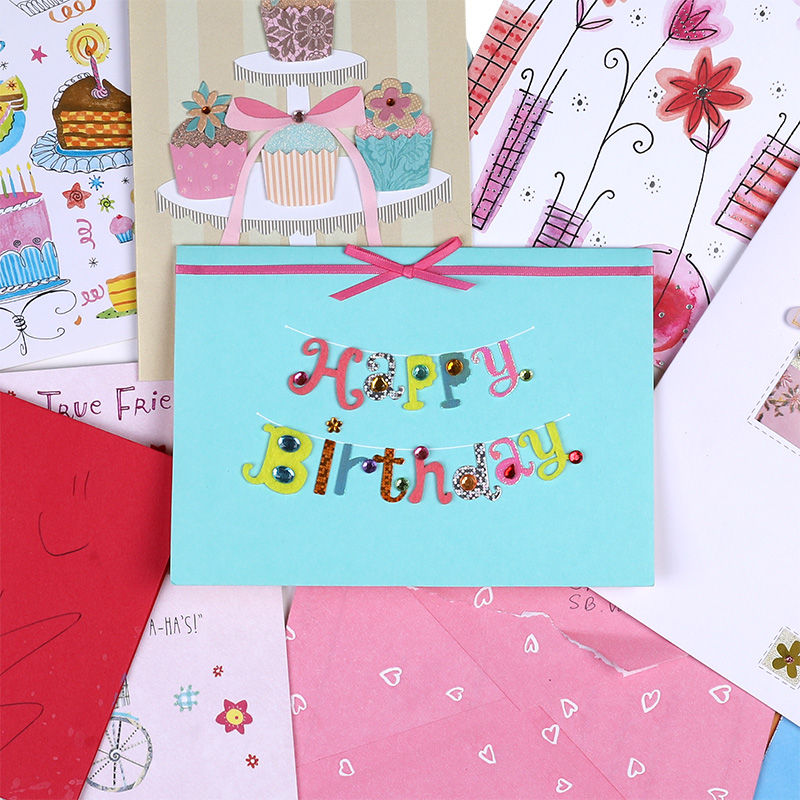
Birthday Cards
Birthday cards are the most common starting point, mostly because they're the only occasion that adds a new card every single year rather than happening once. Our full guide to birthday card books covers how many years to include in one volume and what a milestone birthday version looks like as a gift.

Wedding Cards
Wedding cards arrive all at once rather than accumulating over years, which makes them their own case. What to Do With Wedding Cards After the Wedding and our wedding card box buying guide both cover that side of things in more depth.
Sympathy Cards
Sympathy cards tend to be the hardest to make a decision about, since setting a timeline on when to deal with them can feel wrong. Our guide on what to do with sympathy cards covers that at its own pace.

Holiday Cards
Holiday cards collected over years of family photo cards and seasonal notes turn into their own kind of record. Turning holiday cards into a coffee table memory book covers that specific format.
After making books from two different occasions, one Cardkive customer, M. Black, put it simply:
"I did a book for cards from my wedding and my first baby. It's the best way to keep cards without the clutter they make. The quality of the books is top-notch."
Whatever the occasion, the underlying question is the same one this guide is built to answer: what do you do with cards once the drawer or the shoebox stops working?

How to Turn Your Cards Into a Book, Start to Finish
With Cardkive, the process is the same regardless of occasion. First, you order the Cardkive box. A standard box can hold around 50 or more cards, while the Double Cards Book holds roughly twice that, for larger or multi-year collections. Just place your greeting cards into the box and drop It In the mail with the provided pre-paid label.
From there, every card gets photographed individually, capturing handwriting and any 3D details rather than flattening everything into a scan. A layout gets built from those photographs, which comes back to you for approval before anything is finalized, so there's a chance to add captions, adjust the order, or change the cover before the book is printed. And if you prefer, you can choose to receive your cards back once photography is done. See the full process for the complete walkthrough.
Greeting Card Book vs. Other Formats
A greeting card book isn't the only way to keep cards, and it's worth knowing where it sits next to the alternatives before committing to one.
A keepsake box keeps cards loose and unsorted, which is the lowest-effort option up front and the one most likely to end up in a closet, unopened, once the day it was for is over. Cardkive vs. Keepsake Box covers that comparison directly.
A card album stores cards in plastic sleeves, browsable and easy to add to, but bulky at scale and generally not built for oversized or 3D cards. Greeting Card Albums vs. Keepsake Books lays out that difference in full.
A scrapbook is the most hands-on option, and often the one that stalls out halfway through. How to Turn a Scrapbook of Cards Into a Proper Keepsake Book covers what to do with one that's already underway.
A greeting card book is the version of all of these that ends the project rather than extending it: no ongoing sorting, no shelf space taken up by a box that never gets reopened, just a finished book.
Frequently Asked Questions
What is a greeting card book?
A greeting card book is a bound keepsake made from cards you've already received. Each card is photographed and laid into printed pages, and, If desired, the physical cards are returned to you once that's done.
How do I turn my greeting cards into a book?
Cards go into a box and get sent in as they are, loose, in a scrapbook, or mixed. From there, each one is photographed, built into a layout you approve, and printed into a bound book, with digital copies of everything included.
How many cards can I include?
Cardkive's box holds around 50 cards, and the Double Cards Book fits roughly twice that for a larger or multi-occasion collection. There's no minimum, so even a handful of cards is enough to start, and every book gets the same high quality photography and printing no matter how many you send.
What's the difference between a greeting card book and a card album?
A card album stores cards loose in plastic sleeves, so they stay removable and the collection stays open-ended. A greeting card book photographs each card and binds them into finished, printed pages instead.
How long does it take?
Turnaround depends on order volume and the season, but the shape of it stays the same: cards get photographed once they arrive, a digital proof comes back for your approval, and the book goes to print once that's confirmed.
How much does a greeting card book cost?
Pricing depends on the number of cards and the book size. See current options for specifics, including the Double Cards Book for larger collections.
Keep What Matters, Skip the Shoebox

However the cards got here, glued into a scrapbook, loose in a drawer, or boxed up and half-forgotten, the point of a greeting card book is the same: turning what's already been kept into something that actually gets opened again.
Get started with Cardkive and see what your own cards would look like as a keepsake book.


Comments